

Trip planning
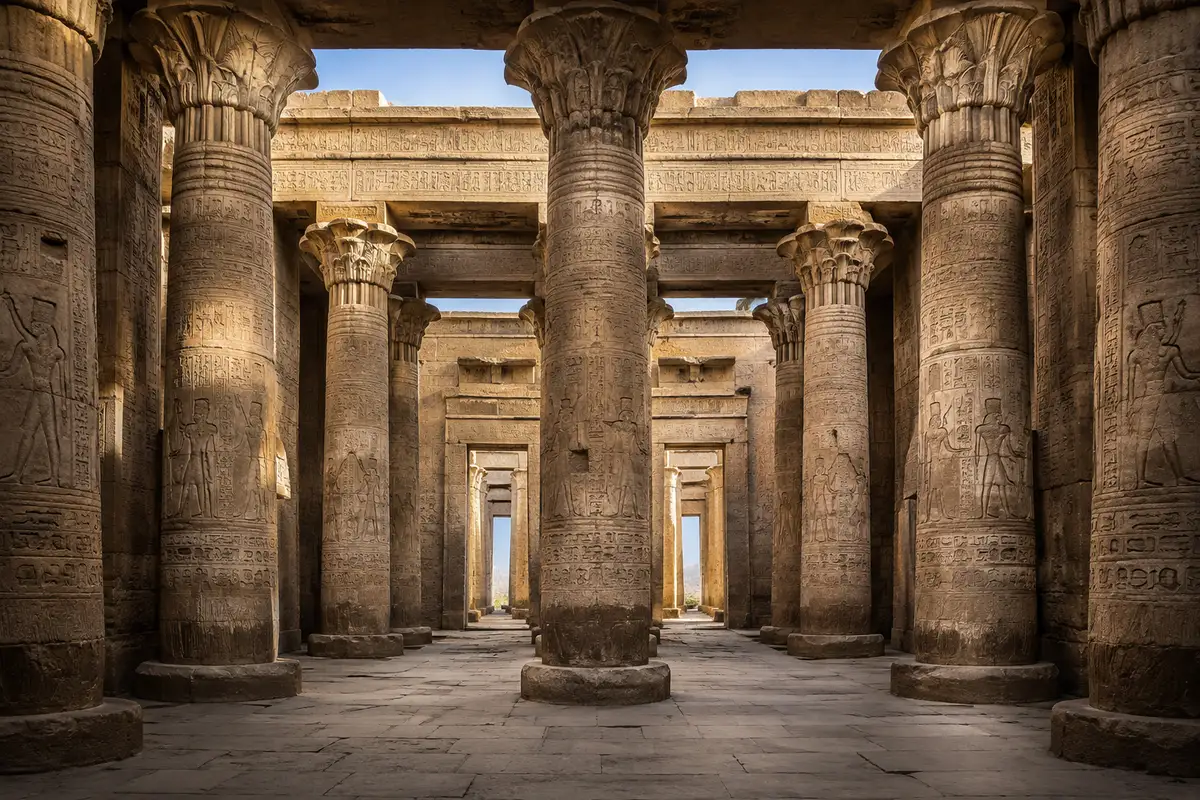
Kom Ombo deserves more than a quick stop on the way to Aswan. It is one of the clearest surviving examples of a double temple in Egypt, and its walls preserve one of the best-known scenes connected with ancient medicine. The official Ministry of Tourism and Antiquities page for Kom Ombo stresses both points: the temple was dedicated to two deities and it also includes a Roman-period scene believed to show surgical instruments.
That combination makes the site unusually useful for study. Kom Ombo is not just photogenic ruins on the Nile. It is a case study in how architecture, religion, ritual, and technical knowledge could meet inside one monument.
Historical Setting and Construction
According to the Ministry of Tourism and Antiquities, an earlier temple existed at the site in the New Kingdom, but the standing monument belongs to the Graeco-Roman Period. The earliest attested royal name in the present structure is Ptolemy VI Philometor, while most of the decoration was completed under Ptolemy XII Neos Dionysos.
That matters because Kom Ombo should not be treated as a pharaonic monument frozen in one remote age. It belongs to a long Egyptian tradition that continued under new political rulers. The temple keeps older Egyptian religious forms, yet its surviving decoration also reflects the world of Ptolemaic and Roman Egypt.
This continuity is easy to miss if the temple is viewed only as a scenic stop. In reality, its chronology helps explain why Kom Ombo preserves both deeply Egyptian cult traditions and later visual choices.
How the Double Temple Works

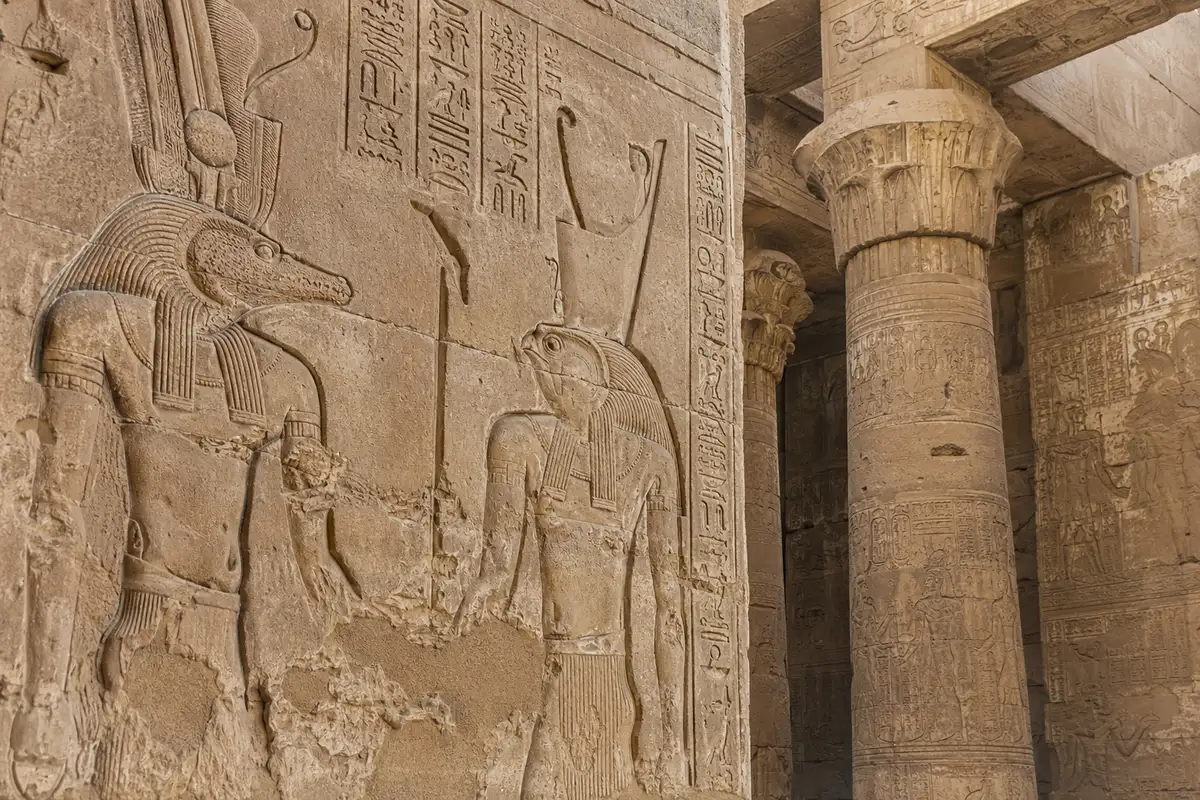
The official ministry source explains that Kom Ombo has two parallel axial passages through its columned halls, ending in two sanctuaries. The southern axis belongs to Sobek and the northern axis to Harwer, or Horus the Elder. In practical terms, that means the monument is planned around duplication and balance rather than a single straight cult path.
This is the feature that makes Kom Ombo architecturally distinctive. Doors, halls, and sacred spaces are organized to serve two divine spheres in one coordinated building. For travelers studying Upper Egypt as a route rather than isolated stops, the broader Nile Valley Travel Guide helps place Kom Ombo beside Edfu, Luxor, and Aswan in a single historical landscape.
Readers who compare plans rather than isolated photographs will notice that Kom Ombo teaches structure unusually well. The building itself becomes a diagram of twin dedication.
Sobek and Haroeris in One Monument
The Famous Medical Relief
One of the most discussed carvings at Kom Ombo is the panel usually linked with medicine. The official Kom Ombo monument page says that during the Roman Period, in the second century AD, a scene was carved featuring what are believed to be surgical instruments. A summary by Rosalie David in Egyptian Mummies and Modern Science adds an important caution: the Temple of Kom Ombo has a Roman-period wall relief that may depict a set of surgical instruments.
That wording matters. Serious interpretation begins with caution. The relief is famous because it appears to present a set of technical objects, but the strongest responsible statement is that it is commonly interpreted as medical or surgical equipment, not that every carved item can be identified with complete certainty.
That skeptical phrasing is not weakness. It is good method. Ancient evidence often survives in fragments, and strong history is built by saying exactly what the source supports and no more.
What the Panel Can and Cannot Tell Us
Scholars have often read the panel as showing elongated probes, blade-like forms, hooks, containers, and other implements associated with medical practice. The Coppens and Vymazalová study abstract is especially useful because it reminds readers that the famous relief, often labeled KO 950, is only one part of a larger offering scene and should not be isolated from its full temple context.
So the panel is valuable, but it should not be romanticized. It does not prove a modern-style operating theatre at Kom Ombo. What it does show is that medical knowledge formed part of the cultural world represented at the temple, and that Roman-period Egypt could visualize medicine in explicit and memorable ways. Readers interested in the material side of ritual knowledge may also compare this with Gate East’s guide to ancient Egyptian mummification, where technical practice and religious meaning also intersect.
A Skeptical Reading Is Better Than a Romantic One
How to Visit and Study Kom Ombo Today
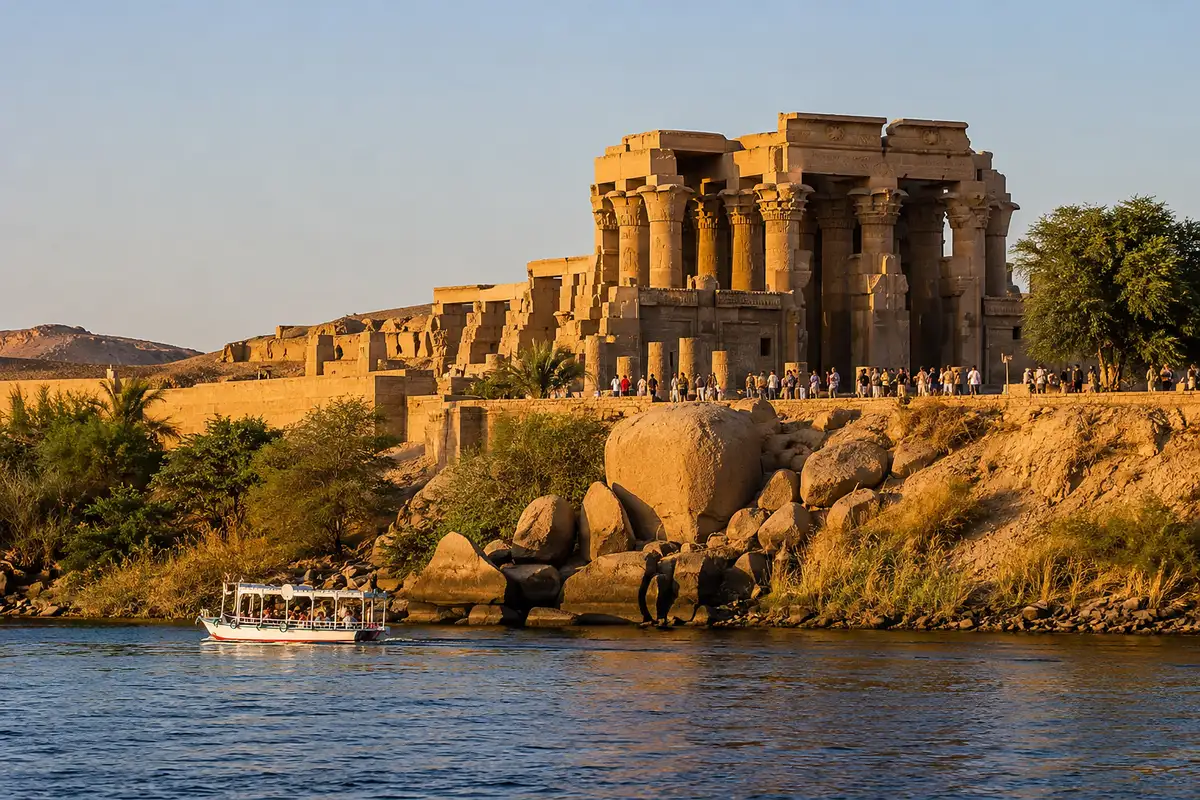
For on-site study, combine the temple with the nearby Crocodile Museum, which the Ministry says opened in 2012 and displays crocodile mummies, Sobek statues, and finds that illuminate the cult background of the site. This turns a short visit into a fuller reading of Kom Ombo: architecture in the temple, animal cult evidence in the museum, and the Nile setting outside both.
Kom Ombo also works well in sequence with Edfu Temple. Edfu shows a more conventional single-major-cult temple, while Kom Ombo shows a double arrangement. Put the two together and you get a much sharper understanding of how flexible temple planning could be in later ancient Egypt.
The river setting matters as well. Kom Ombo is best read as part of a Nile landscape of movement, ritual travel, and linked temple centers rather than as a detached ruin.
Frequently Asked Questions
Why is Kom Ombo called a double temple?
Because the monument was planned for two deities and contains two parallel axial routes ending in two sanctuaries, rather than one single cult axis.
Which gods were worshipped at Kom Ombo?
The temple was dedicated to Sobek, the crocodile god, and Haroeris or Horus the Elder, with related family deities worshipped alongside them.
Is the medical relief really a set of surgical tools?
It is commonly interpreted that way, but careful scholars phrase the claim cautiously and say the panel may depict surgical instruments.
Was Kom Ombo a hospital?
There is no good reason to call the temple a hospital. That is a modern exaggeration, not the safest archaeological reading.
What should I visit with Kom Ombo Temple?
The nearby Crocodile Museum is the best companion stop because it adds direct evidence for the Sobek cult and the crocodile mummies associated with the site.
Where does Kom Ombo fit in a Nile Valley itinerary?
It fits naturally between Aswan and Edfu and is especially useful when compared with other Ptolemaic temples in Upper Egypt.
Gate East can help organize a heritage-focused route through Aswan, Kom Ombo, Edfu, and the wider Nile Valley, with guiding, transport, and pacing tailored to travelers who want real historical context rather than a rushed checklist.


Comments & Travel Questions
Share a question, travel note, or feedback about this guide.