
Introduction
The route of the Holy Family in Egypt is considered one of the most important pilgrimage and religious tourism trails in the world, as it tells the journey of Jesus, the Virgin Mary, and Saint Joseph the Carpenter to the land of Egypt. This journey was an important part of Christian history. According to Christian tradition, the Holy Family traveled hundreds of kilometers across Egyptian lands, moving between many towns and villages, leaving behind sites that have now become religious shrines visited by people from all over the world.
The Beginning of the Story... Why Did the Holy Family Come to Egypt?

The story begins after the birth of Jesus Christ in Bethlehem, when King Herod ordered the massacre of young children out of fear that a "new king" had been born. According to the Gospel, an angel appeared to Saint Joseph in a dream, instructing him to take the Child Jesus and His mother, Mary, and flee to Egypt until the danger had passed.
Joseph obeyed immediately, and under the cover of night, the Holy Family left Bethlehem. They crossed the desert on a difficult and exhausting journey until they reached the land of Egypt, which became a safe haven for them. Thus began one of the most remarkable and significant religious journeys in history.
The Holy Family's Entry into Egypt
The Holy Family entered Egypt through its eastern gateway, crossing into the country via the ancient city of Pelusium (Al-Farma) in North Sinai. From there, they continued their journey through several towns and villages in the Nile Delta. According to Christian tradition, the Holy Family was warmly welcomed by the people in some places, while in others they faced hardships due to the difficult terrain and the challenging conditions of travel.
The journey was long and exhausting, as the Holy Family traveled mostly on foot and over great distances, constantly searching for safe places to stay away from danger. Despite these challenges, their journey through Egypt became one of the most sacred and enduring pilgrimages in Christian history.
From the Nile Delta to Old Cairo
Journey to Upper Egypt

**The Holy Family continued their journey southward along the Nile, passing through the governorates of Minya and Assiut until they reached the Monastery of Al-Muharraq in Assiut Governorate.**
**The Monastery of Al-Muharraq is considered one of the sites most closely associated with the Holy Family's journey. According to Christian tradition, the Holy Family stayed there longer than at any other stop along their route. The monastery is home to an ancient church, regarded as one of the oldest churches in Egypt, and it continues to welcome pilgrims and visitors from around the world.**
**Another important stop was the Monastery of Gabal El-Teir in Minya Governorate, a site closely linked to the Holy Family's journey through Upper Egypt. The monastery is associated with numerous historical and religious traditions commemorating their passage through the region.**
The Return from Egypt
**After the death of King Herod, an angel appeared once again to Saint Joseph, telling him that it was safe to return home. The Holy Family then departed from Egypt and journeyed back to Palestine after a long and challenging stay. Although they left Egypt, they also left behind a profound spiritual and religious legacy. The places they visited became sacred landmarks and remain an integral part of Christian history and heritage, attracting pilgrims and visitors from around the world to this day.**
The Holy Family Trail Today
The Global Significance of the Holy Family Trai
**The Holy Family Trail is not only of great religious significance to Christians, but also serves as a bridge between civilizations and cultures. It brings together history, archaeology, Coptic heritage, art, and Egypt's diverse natural landscapes, reflecting the enduring values of peace, hospitality, and coexistence for which Egypt has long been known.**
**Today, the trail is recognized as one of the world's most important religious pilgrimage routes and a key pillar of Egypt's cultural and religious tourism. By preserving this sacred heritage and welcoming visitors from across the globe, the Holy Family Trail continues to strengthen Egypt's position as a unique destination where faith, history, and culture come together.**
Government Efforts to Develop the Holy Family Trail
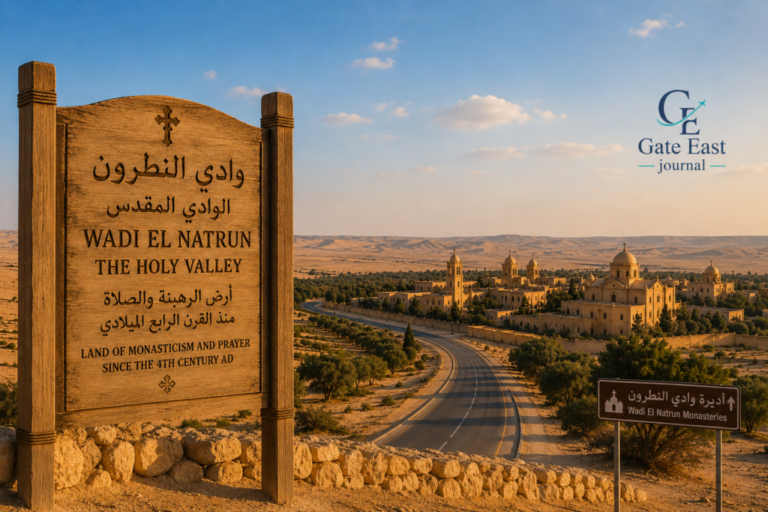
**The Egyptian government has given great importance to the development of the Holy Family Trail by restoring churches, monasteries, and historic sites, while also improving roads, tourism facilities, and visitor services. In addition, multilingual informational signs and modern visitor centers have been established to enhance the overall experience for pilgrims and tourists alike.**
**Egypt also actively promotes the Holy Family Trail through international tourism exhibitions, cultural events, and global marketing campaigns, presenting it as one of the country's flagship religious tourism projects. These efforts aim to preserve this unique spiritual heritage while strengthening Egypt's position as a leading destination for religious and cultural tourism.**
Conclusion
**The Holy Family Trail is far more than a collection of historic and archaeological sites—it is a remarkable story of faith, hope, and resilience that unfolded across the land of Egypt, leaving a lasting legacy in its cities and villages. Today, the trail offers visitors the unique opportunity to follow in the footsteps of one of history's most celebrated journeys while discovering an extraordinary blend of spirituality, history, cultural heritage, and ancient civilization.**
**Whether traveling as a pilgrim, a history enthusiast, or a cultural explorer, visitors to the Holy Family Trail experience a journey unlike any other. It stands as a powerful symbol of Egypt's enduring role as a land of peace, hospitality, and rich heritage, making the country one of the world's most distinctive destinations for religious and cultural tourism.**


Comments & Travel Questions
Share a question, travel note, or feedback about this guide.