
Introduction
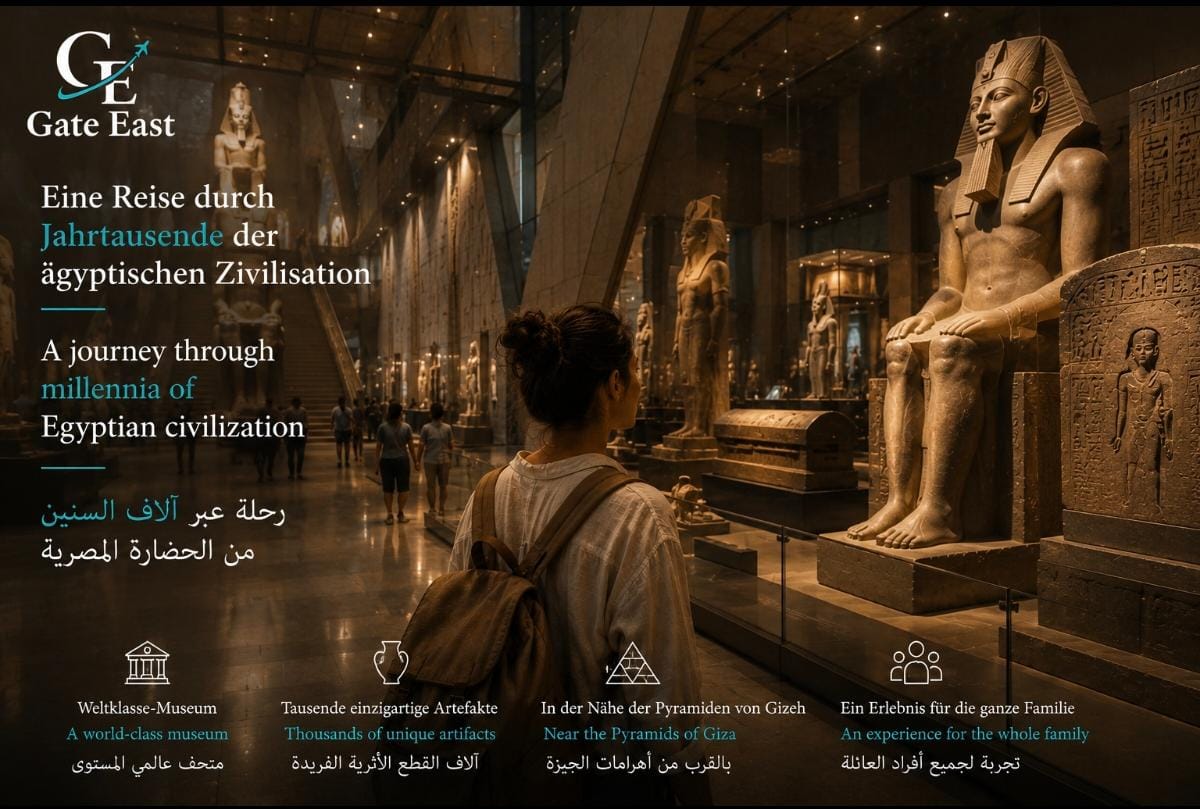
The Grand Egyptian Museum is considered one of the greatest cultural and historical projects in Egypt and the world. It is a modern landmark designed to present the history of ancient Egyptian civilization in an advanced way that combines the value of ancient artifacts with the beauty of modern architecture. The museum offers visitors a journey through thousands of years to discover the achievements of the ancient Egyptians in various fields.
The Location and History of the Museum

The Grand Egyptian Museum is located in Giza Governorate on the Cairo–Alexandria Desert Road, near the Giza Pyramids. Its location places it within one of the most famous archaeological and tourist areas in Egypt.
The idea of establishing the museum began with the goal of creating a world-class place that would reflect the greatness of Egyptian artifacts. The foundation stone was laid in 2002, and construction and preparation stages began afterward to make it one of the largest archaeological museums in the world.
The Museum’s Design and Area
The Grand Egyptian Museum is built on a huge area of approximately 500,000 square meters. It was designed with a modern architectural style inspired by ancient Egyptian civilization.
The museum includes:
The main entrance for welcoming visitors.
The Grand Staircase, which displays huge statues.
Various exhibition halls.
Artifact restoration centers.
Equipped storage areas for preserving artifacts.
Service areas, restaurants, and gardens.
The museum’s design features a remarkable view of the Giza Pyramids, creating a connection between the past and the present.
Exhibition Halls Inside the Museum
The Most Important Artifacts in the Museum

The museum houses some of the most important archaeological treasures in history, including:
The Collection of King Tutankhamun: It includes the famous golden mask, jewelry, and royal furniture.
The Statue of King Ramesses II: One of the largest and most famous statues in the museum.
The Boats of King Khufu: They reveal the skill of ancient Egyptians in shipbuilding.
Statues of Kings and Queens: They reflect the development of sculpture in ancient Egypt.
Ancient Tools and Jewelry: They show details of the daily life of ancient Egyptians.
Number of Visitors and Nearby Hotels
The Grand Egyptian Museum is a global tourist destination and is expected to welcome thousands of visitors every day. The average expected number of visitors is about 12,000 visitors per day, with higher attendance during holidays and tourist seasons.
There are also many hotels near the museum and the Giza Pyramids, providing various accommodation options for tourists and helping to promote tourism in the Giza area.

The Importance of the Grand Egyptian Museum
Conclusion
The Grand Egyptian Museum represents a symbol of Egypt’s greatness and its civilization that has lasted for thousands of years. It combines ancient history with modern technology in one place. Through its priceless artifacts and unique architectural design, the museum has become one of the most important cultural landmarks that Egypt proudly presents to the world.
Frequently Asked Questions
can you imagine a journey that starts at the Giza Pyramids and ends among the treasures of the Pharaohs inside the Grand Egyptian Museum?
Yes, it is a unique journey that combines viewing the Giza Pyramids, which are among the greatest wonders of the ancient world, with a visit to the Grand Egyptian Museum to discover thousands of artifacts that tell the story of Egyptian civilization. Among the most remarkable treasures are the collection of King Tutankhamun and the statues of kings and queens. It is an experience that takes visitors through thousands of years of history and culture.
Plan This Egypt Trip With Gate East
Turn this guide into a real itinerary. Gate East can build a private Egypt round trip with the right route, pacing, guides, transfers, hotels and local experiences.




Comments & Travel Questions
Share a question, travel note, or feedback about this guide.